Author: kwetoday

Research Adventures on Indigenous Land

A critical analysis of Decolonizing Methodologies’ chapter entitled “Research Adventures on Indigenous Lands”

Research Adventures on Indigenous Lands

The experiences of Indigenous people in research have not always been positive. Even though Linda Tuhiwai Smith focuses on the history of the Maori people, it is evident that the experiences of the Maori people are also the experiences of many Indigenous peoples around the world. In this particular chapter of her book, Decolonizing Methodologies, research is defined as a quest for knowledge in the new world (78). Smith outlines how research problematizes Indigenous peoples and how within a historical context research deployed differential power relations over Indigenous peoples, their culture, and their land. Being an Indigenous woman herself, Smith understands these differences in power relations from her lived experiences. Even though Smith discusses research and how early European settlers exploited Indigenous peoples for their own benefit within a historical context, this exploitation is not a thing of the distance the past. This theme of exploitation along with tokenism, accessibility, and the invisibility of Indigenous peoples specifically Indigenous women from research and its publications is evident in Smith’s piece. I will discuss these themes and access their strengths/weaknesses in relation to other feminists’ thought and practice.

The theme of exploitation is the most prominent within Smith’s chapter. At the heart of this exploitation is colonization. While research has progressed in many ways, some of the colonial practices within research are still practiced today. Smith highlights the fact that the Maori people considered themselves to be the “most researched people in the world” (88). This statement holds true even for Indigenous people in Canada. However, some might argue that Indigenous people have a say when it comes to research being done on their bodies, culture, or land, and that many improvements have been made to include their voices and experiences in a non-exploitative way. However, that is far from the truth. Smith describes how research into Maori life was published under only the investigators’ names with no credit to the chiefs who provided Indigenous knowledge. Unfortunately, this is a practice that still happens today. In Canada, partnerships are claimed to be formed with these Indigenous populations; yet, Indigenous populations have very little say into how the research is to be conducted. Investigators will reach out to communities and will recruits the ones that agree to the process even after it is has been designed with very little input from Indigenous populations. This hierarchal, top-down way of conducting research indicates a continuous exploitative relationship with Indigenous populations all in the name of research. One could highlight, counter to this argument, the fact that some First Nations are even coming up with their research policies and practices. This is good for those investigators who wish to abide by those First Nations’ policies and practices. However, not every investigator or research team is willing to do just that. The question that presents itself then is who benefits from the research that is being done?

Existing alongside of this theme of exploitation is the theme of tokenism. In the section titled “Organizing Research,” Smith describes the composition of certain scholarly societies that had limited membership. One such example is the Polynesian Society that was established in 1892 after settlers saw a need to build a community of scientists and “system of communication which allowed for the production of ideas” (87). Even though both Indigenous people and Indigenous women were a part of this society, one could say that their presence was simply a false image of inclusion because the systems of communication did not include their Indigenous languages. In other words, the Indigenous representatives had to learn the settlers’ language in order to communicate with them and with scientists. As suggested by Lugones in “Have We Got a Theory for You!”, she suggests that “non-imperialist feminism requires that you make a real space for our articulating, interpreting, theorizing and reflecting about the connections among [the motive of friendship]” (p. 21). This could similarly be applied to the world of research and creating partnerships between Indigenous communities and research teams.

With my personal experiences of working on a research team that conducted research on diabetes and Indigenous populations, I witnessed this tokenism first hand after I had been hired and was the only Indigenous person present on this team. This could have been a rewarding and educational experience for me. Instead the only thing I learned was how to deal with discrimination, racism, and human rights/equity issues while working in a team-setting. My personal experiences can be compared to the experience of Audre Lorde in “The Master’s Tools Will Never Dismantle the Master’s House” where she poses the questions, “Why were two phone calls to me considered a consultation? Am I the only possible source of names of Black Feminists?” (50). The questions Lorde poses are similar to the ones I had for the research team I worked on as a part-time student: Why was I the only Indigenous person hired? A counter-argument to this could be that research institutions do allow for the space for adequate Indigenous representation and consultation when it comes to research that affects them. This could be seen with the development of programs like First Nations studies or with the development of Indigenous centres at these same institutions, and the reservations of a certain number of seats within the institutions. Yet by making these opportunities available only to those who have admission to these institution creates issues of accessibility both within a theoretical and practical context.

The third theme presented by Smith in this chapter is one of accessibility. Historically, often the status of the scholar was afforded to certain segments of the population. Smith (1999) writes, “Access to the status of gentlemen and scholar was based on class divisions and wealth” (86). This issue of accessibility to the status of scholar can be contrasted with the exorbitant tuition rates of many post-secondary institutions where much of the research produced in Canada is conducted (aside from government and other social agencies). Much of the discourse on Indigenous populations that is presented to all populations in Canada is one that is set out by these scholars and for many years these discourses have been demonizing towards Indigenous peoples. Smith also writes about the two major myths of the origins of Maori people. She describes the first myth as one where the Maori arrived to the New Zealand area via canoes and the second myth as one depicting the Maori as “naturally more aggressive [as] they conquered and wiped out the Moriori” who were a more peaceful, pre-existing group (87). Similar myths are applied to Indigenous people in Canada with the Bering Strait theory which theorize that Indigenous peoples migrated over from Asia to settle here. These myths create the image of Indigenous populations as being as settlers themselves which follows the colonizers’ argument that they too have the right to conquer Indigenous populations since the land does not inherently belong to Indigenous peoples. Smith (1999) writes, “The greater ideological significance of the myths, however, is, that they support and give legitimacy to the role of conquest. . .” (87). The trouble with these theories and accessibility is that they are all too common in lower levels of education. The only institution and individuals available to change elementary or high school curricula is the government.

Another way in which accessibility becomes a theme is with the creation of the systematic note taking by researchers identified as Smith as part of the “most significant early work on Maori” (84) because of its likening to the conventions of present day social science. Again the issue of language presents itself as researchers took notes in their own language and relayed information in their own language. The information collected by researchers both past and present is always presented back to Indigenous people in the researchers’ languages. This exclusion of the Indigenous language from research echoes Lugones’ statement:

“When we talk to you we use your language: the language of your experience and of your theories. We try to use it to communicate our world of experience. But since your language and your theories are inadequate in expressing our experiences, we only succeed in communicating our experience of exclusion. We cannot talk to you in our language because you do not understand it” (20).

The importance of the above statement is that the language barrier and inability to communicate experiences effectively to non-Indigenous populations existed in the past and it still holds true in the present day. Fortunately, today, some institutions are allowing Indigenous scholars to present their research in their own language. In addition to this, PhD programs at Canadian institutions require a second language test and many Indigenous students are opting to learn their Indigenous language to meet this requirement.

Even though some steps in the right direction to address accessibility issues and barriers to language have been taken, there remains a big issue with respect to Indigenous people and specifically Indigenous women, and that is the theme of invisibility. This theme is presented by Smith when she describes the relationships between the colonizer, Sir George Grey, and the Maori chiefs when all that mattered was the knowledge that was made available to Grey through the chiefs. Yet, the chiefs were almost invisible to the non-Maori audience with the absence of their names in Grey’s materials (Smith, 1999, 82). Critical to this theme of invisibility are the experiences of Indigenous women.

My major critique to Smith’s chapter is the absence of the experiences of Indigenous women. She does make an effort in mentioning Indigenous women. However, it is done so only briefly in mentioning the relationships that Indigenous women and colonizers usually formed. At the heart of colonization is not only the conquering of Indigenous land but also Indigenous people’s bodies, especially Indigenous women’s bodies. Within a historical context, many social policies, like eugenic movements, targeted Indigenous women’s bodies by limiting their rights to reproductive health and reproductive justice. Today, some research teams continue to focus on the health of Indigenous women and their bodies. Again this raises the question of who benefits from the development of these present day research questions.

These question of who benefit is similar to the question that is raised by Faith Wilding in “NeMe: Knowing Bodies – Feminist issues in health, medicine, and biotechnology.” Talking about the Feminist Women’s Health Movement (FWHM) in influencing change with respect to the treatment of women in health centres, Wilding writes, “one cannot lose sight of the important question of who is benefiting from this most, and point out that the medical establishment has not reciprocated what it gained from the FWHM…” (2). Yet even within the FWHM, the contributions of the Indigenous feminist movement become invisible. Before settlers arrived Indigenous women had roles within their communities as midwives and healers. These roles were lost with the creation of patriarchal government relations. In addition to this, Wilding fails to acknowledge the Indigenous feminist movement when she writes, “To the great loss of women everywhere, there has been an erosion of the activist women’s health movement [and] currently, all areas of the female life cycle have been re-colonized and staked out as medical territory” (2). This is disheartening to read because of the fact there are Indigenous women who are active various Indigenous health activist organizations that work directly with Indigenous women in a localized and globalized context. Even as both Indigenous scholars, Wilding being from South America and Smith being from New Zealand, try to identify the absence of women and Indigenous people respectively from the world of research, they are contributing to the very invisibility of Indigenous women’s experiences by eliminating Indigenous women’s contributions both within a historical and present day context. It could be said that their mere presence within the world of academia is a step forward in the right direction and that they are respecting their community and culture by paying attention to the collective Indigenous identity instead of the individual Indigenous identity within their research. Unfortunately, I believe this is just recreating the tokenism that appears historically many times over and over again.

This particular chapter of the book presented several themes: exploitation, tokenism, accessibility, and invisibility of Indigenous people, specifically Indigenous women from the world of academia. In comparison to the treatment of Indigenous people as research participants, it appears that positive strides have been made to include Indigenous people more actively. As mentioned earlier, some institutions have set up programs specifically relating to Indigenous studies, reservations of a certain number of seats for Indigenous students in certain programs, or the development of Indigenous centres. However, the way institutions conduct research in a top-down, hierarchal fashion where investigators decide how the research is to be conducted with almost little to no input from Indigenous participants, and recruit only those participants who are willing to participate in the already-designed research study indicates a continuous exploitive relationship between investigators and Indigenous peoples. The way in which research is to be conducted should allow Indigenous people to have a more active role. In addition to this, Indigenous women scholars should also be more active in eliminating the invisibility of Indigenous women contributions to society either in a historical or present day context. By focusing on the collective, Indigenous women scholars are contributing to the invisibility of Indigenous women was once a major problem of the past. Indigenous women today are just as strong as they were historically. It is time that scholars, either Indigenous or non-Indigenous, begin to recognize the contributions that Indigenous women have made and continue make within their own lives and the lives of others in the communities they situate themselves in.

  References

Lugones, M., & Spelman, E.”Have we got a theory for you!”.

Smith, L. T. (1999). Reserach adventures on indigenous land. Decolonizing methodologies: Research and indigenous people (pp. 78-94). Dunedin: University of Otago Press.

Wilding, F. (2006). “Knowing bodies: Feminist issues in health care, medicine, and biotechnology.” (http://www.neme.org/452/knowing-bodies).

FNIHB NIHB

So you are a status-first nations person (as defined by the Indian Act) or an Inuit (that’s right this drug plan does not include all Indigenous people and does not include Metis people–thanks to @jess_danforth for that information), and you tried to get your prescription refilled Sunday night (allegedly by Health Canada this problem has been going on since Sunday night) or Monday night, but you couldn’t?

Well, that’s because there is a claims problem at FNIHB (First Nations and Inuit Branch) with their NIHB (Non-insured Health Benefits) plan.

It just so happens that this problem started right after the Idle No More movement. Well, allegedly it began on Sunday not Monday.

So I thought I would take a walk over to my pharmacy where I get my prescriptions refilled and I could get my birth control (since I had that sitting there for the past two weeks just didn’t need yet as of yet). The pharmacist said that they could not process my migraine medication (that I don’t need today but I will need when I get a migraine). The reasoning the pharmacist gave me was this:

“The provider says that there is a limit on the amount of tablets they can give out so you have to wait until that time limit has passed.”
I asked when that time limit was, and they usually give me a time limit and when I can come back.

“They didn’t provide a time limit and it doesn’t say anything here”

So I guess it is kind of a claims problem. I walked back home and decided to do a little google search and this is what I found.

Apparently our NHIB program is under an audit since some pharmacies have been making claims against prescriptions that have not been filled or have never been dropped off, or there were “administrative” errors. There are TWO pharmacies being under investigation for fraudulent claims in the millions. This article reads:

Ottawa is suing a Manitoba pharmacist and his former drug store for $3.1 million over allegations they fleeced the aboriginal health-benefits plan.
Another Nova Scotia pharmacist and his numbered company face a $1.36-million lawsuit over allegedly “fraudulent” claims.

Then in the same article, Health Canada is quoted saying *wait for it … wait for it*

“We put the health of our First Nations first. But we have rigorous programs. We’ve very conscious of the public purse, and we’re always doing things to refine our surveillance programs,” she said.
“We’re always working to make sure that we tighten everything up around the edges. We examine what we’re covering, how we’re covering it, and the processes. So it’s a very rigorous program.”

Yes Health Canada you put the health of our First Nations first, and that is why you don’t know why your claims department has been having “problems” since the beginning of the Idle No More protests that have been rolling out across the country, and you don’t know when the problems will be solved.

Good job Health Canada, and yet again First Nations peoples are exploited by institutions without their knowledge. Also that emergency refill is bullshit because I couldn’t get my prescription “emergency” refilled nor could I ask for a “back claim.”

Health Canada: Thank you for your fuckin patronage!

Ps. please remember, I don’t *need* my migraine medication today but there are many elders and sick people who do need their medication TODAY!

The problem with restorative justice

Recently, I had the opportunity to speak at a gathering out west. The theme of that gathering was “Exploring the continuum of violence against women and girls.” This was a pretty powerful event and there was a spectacular list of speakers and presenters (I even met the fabulous Beverly Jacobs, who also moderated the panel I spoke on).

The topic I presented on was simple: experiences of Aboriginal women in the criminal justice system. Specifically, I spoke on my own experiences. I have written about those experiences before so I won’t go into detail on them here. What I would like to write about is what I considered a major fundamental flaw of restorative justice. In particular, this type of justice is credited for being closely related to Aboriginal justice and sometimes the two are considered one in the same (which is one of the first problems).

Let begin by premising that while this type of justice may work in some instances, it does not work in all instances especially in my case. Being a survivor of domestic violence and much of my experiences in the criminal justice system linked to domestic violence, the major problem with restorative justice especially in terms of Aboriginal women who experience domestic violence and then are arrested because of those experiences (like fighting back or making the first complaint but not in the instance of the first experience of being victimized). Restorative justice operates on the principle that justice needs to take place within the community (that is a positive). However, it believes that all parties should be involved including offender and victim. In cases of domestic violence, it is not always the offender that is the one who does the victimizing. Rather, the offender may also be the victim, like in my case.

With that statement, I was the one who was arrested and I was the one who was considered the offender, and not the victim. Although very helpful to reducing the harm done to my criminal record, the restorative/Aboriginal justice route forced me to apologize for me fighting back instead of taking a beating. Kind of counter-intuitive to the whole healing process, right? Along with this, I was forced to partake in cultural initiatives in exchange for my freedom post charge rather than pre-charge. This meant that I had already gone through the formal process of laying of charges and being finger printed and having a history on my criminal record. Again, counter-intuitive to the whole healing process. I would have much preferred cultural services BEFORE admitting any guilt which was what my legal-aid lawyer said was my only route.

Now some people might argue and say that restorative justice is a good approach especially when it involves young people. Yet again, I beg to differ. For young people, they are often committing crimes that are situational to their circumstances. For instance, young people may run away from their situation at home because home life, to them, is not safe and nurturing. Often times, young people run away from a home that is filled with abuse and victimizing situations. Young people don’t run away for fun. Also, young people don’t commit crimes for fun. Again, more often than not, young people are criminalized for behaviours that are done out of survival. One might argue that in the case of London, during the infamous St. Patrick’s day fiasco, that young people do commit crime for “fun.” Again, this is situational and not a reoccurring pattern. It just so happens that the media prefers to report on crimes committed by young people as opposed to crimes committed by adults (and what do you know, statistically there is more crime committed by adults than there is by youth). So what does this have to do with restorative justice? Well if we were to put all parties involved in the same room, say for a healing circle or sentencing circle (formally called sentencing conferencing), then that means the young person is often re-victimized again. Young people actually face a higher rate of victimization than any other population in Canada. In fact, the whole idea that young people are growing more violent and scarier is just a fictitious fact created by the media via creating a moral panic. Media are corporations out to make a buck.

So we need to begin to look at how the format of restorative justice actually affects all parties in the long term and not just the short term, and this is a major problem with the criminal justice system (CJS): it is a short term solution, contributing to long term problems.

Also we need to move away from corresponding restorative justice to Aboriginal justice. Aboriginal justice isn’t about revictimizing those who have been previously victimized. I recently just learned about “transformative justice” and I propose that the CJS begin to seriously look at this as an option. Along with this, the government needs to begin refocus for their funds on rehabilitative programs as opposed to building more penitentiaries. What good is a jail if it does not have adequate programming made to carry out the purpose of the Criminal Code of Canada which states:

718. The fundamental purpose of sentencing is to contribute, along with crime prevention initiatives, to respect for the law and the maintenance of a just, peaceful and safe society by imposing just sanctions that have one or more of the following objectives:

  1. to denounce unlawful conduct;
  2. to deter the offender and other persons from committing offences;
  3. to separate offenders from society, where necessary;
  4. to assist in rehabilitating offenders;
  5. to provide reparations for harm done to victims or to the community; and
  6. to promote a sense of responsibility in offenders, and acknowledgment of the harm done to victims and to the community.


Just because something “sounds” nice and works in *some* situations doesn’t mean that it works in all situations and certainly doesn’t mean that it is a pleasant form of justice for all parties involved.


References:


All I want for Christmas

Well today was an eventful day for me: I lost my tooth. I mean, I already had lost it 11 years ago but had a partial (which is a replacement tooth/retainer device), and I had lost it in a car accident where I was hit by a car, apparently flew 6 feet either in the air or in front of the car, and broke the windshield on the car with my head. Big effin ouch right?

I woke up today and couldn’t find my tooth anywhere! I know I know confusing… why did I take it out? Well I have this fear that I will swallow it in my sleep (and maybe I did swallow it this time lol). I also take it out when I eat certain foods (like nachos). This is also why I avoid dinner dates–not because I fear I will look like a slob or gain weight while on a date, but that my tooth will fall out in the middle of taking a bite and *gasp* my date will be embarrassed to be seen with me as opposed showing a concern about what the hell just happened to me.

This is a false tooth that has fallen out in embarrassing situations for me like sneezing really hard and having it fly to the front of your grade 10 math class or laughing so hard that it fell out at the bottom of your friend’s feet. That happened too. What also happened is I lost a few times before but I have managed to find it, step on it, break it in half and manage to still wear it all these years half broken (because I didn’t have the $$ to replace it).

I lucked out today though. I don’t have insurance like many people in this country. Some people think we have amazing health care in Canada. I beg to differ. I have dreaded this day that I would lose it. Now it’s Christmas soon and all I want for Christmas (and for the past 11 years) is my two front teeth. Literally.

So here I am in my 26th year, still toothless. When I first lost it, the insurance company would argue that I didn’t lose it in the car accident: excuuuuuuuuuuuse me but just because I don’t remember the accident doesn’t mean that I don’t remember the fact that I in fact had all my teeth *before* the accident. The dentist that they sent me to also said that they would wait a couple of years to see if a tooth would grow in its place (a big WTF!), then said I should wait until I was in my 20s (and then my 30s and another big WTF!) because they said my teeth were still shifting and they don’t want to mess up that natural process (another big WTF!). Nonetheless, I hate insurance companies and no tooth did grow in its place, and my teeth haven’t shifted since. Along with this, my great *free* health benefits that *all* Aboriginal peeps get (see what I did there? yes, sarcasm), I’ve been told that they would not cover the cost to permanently replace my tooth (which would cost 2-3K dollars without the cost of X-rays, medications after surgery, etc.) because it is considered “beauty.” Another big WTF!

I am motivated to look more deeply into an idea that has been in the back of my head for a long time because I don’t want any young person (Aboriginal or not) to go through what I did (accident or not) just because they do not have adequate dental insurance. Someone already shared with me www.shinethelight.ca already and this is an organization that was started by a dentist providing dental care to developing countries. I know Canada is not a developing country yet we still have this crappy health care system that does not cover dental work. Well, my idea is to start an organization that provides funds to young people (Aboriginal or not) who do not have dental insurance and need emergency dental care. The cost for my replacement tooth today is 400 and I know that when I previously lost (then found) it I was quoted 600 so I am happy that it’s not the cost of my monthly rental to replace my tooth which isn’t as bad and if I pay by cash tomorrow I will get 50 dollars off the 450 of the original quote. Thank god I have the funds to pay that and thank god I will get a replacement tooth on Monday after going into the office today. Just thinking about all the other people out there that are in my situation or similar situations: no dental insurance, require dental care, but have limited funds makes me kind of sick to my stomach. So, I am going to turn a bad situation for me into hopefully a good situation for others. Two cheers for a new project! Even if I can’t start an organization like this I am going to look for ways to make something similar to start!

One day…

I know why they paint the walls yellow

This is a post about my first time spending approximately a month in a psychiatric hospital for young people after I tried to commit suicide more than 5 times. I can’t recall how old I was but I think I might have been in high school (that time frame is a little hazy).


I once read somewhere that you shouldn’t paint your walls yellow because that will cause depression. I never understood the reasons why until I spent a few weeks in a psychiatric hospital for young people. Most of us that were in there didn’t have to be in there. I kept to myself most of the time. Yet, I quickly learned that I had to begin socializing with others because not socializing with others in a psychiatric hospital is considered pathological. Oh, the irony. Being a young female, I had to follow certain rules like not be in the same room as a male without proper supervision. It didn’t take long for me to learn why this rule was in place. There were sexual advances by the opposite sex that were made even when there was proper supervision.

My room was average sized. I often fantasized about running away. The furniture was too heavy to rearrange, and probably for good reason. Luckily, I had a room that was all to myself. It was not far from the nurses’ desk either which sat in the middle of the hospital floor. I couldn’t keep any personal belongings in the room except my clothes and teddy bear. The one thing I wanted to do but could not was to smudge or have traditional medicines.

I didn’t get along with my psychiatrist. In fact, I hated him. He reminded me of my racist principle in elementary school (then again who wasn’t racist and in a position of authority my elementary school). I never talked to him when he entered the room. I was forced to go to this hospital. I didn’t have a choice. The only choice I had was to not talk to people I preferred not to talk too, and I definitely put that silence to good use.

After a month of staying at this place, the things that I learned while I was in there was learn how to play crib (thanks to my dad). Oddly, I am not good at math (even addition which is required for crib), but became quite good at this game. I probably would have never learned how to play this game if I didn’t go to this hospital. I remember having a few day passes with my dad. I am thankful for that too. We went to this really neat place that had amazing pizza. Then again, anything would have been better than hospital food I had been consuming for those few weeks.

I also learned why they tell you not to paint your room yellow. My room at this hospital and all other rooms were painted yellow. This horrendous color of yellow. At the top of the ceiling was this cheap wall-paper that had seashells images intermittently placed in sand. Sometimes I fantasized that I was at the beach waiting to go back home. Unfortunately, if anything this shade of yellow, just reminded you of the awful place that you were in. Places like these are not made to salubrious for one’s soul, mind, or body. These places keep people sick or at the very least medicated to the point of being zombies. These places are not places of health. They are places of sickness and violence. These places keep individuals that the larger society cannot control or that their families cannot handle in a place that restrains them. If you do not act a certain way, you will be marked as being sick. If you do not answer their questions the way the books tell them to be answered, you will be marked as unhealthy or unwilling to become better.

I didn’t receive the help that I needed. The only thing that I learned was how to answer their questions so that I could get what I wanted, or mimic the symptoms that they wanted to see in order to get the things that I wanted. The only thing that I wanted was to be free from the pain that I was feeling. Yet, they couldn’t help me because they couldn’t listen to what I really wanted to say. They only wanted to listen to the things that they wanted to hear and the things that they wanted to see. The things that books tell them to watch out for. I also learned was why they paint the walls yellow: To keep the sick, sick.

When I grow up…

Today I am supposed to be working on an essay, studying for my first exam this Saturday (I need to read two books plus some articles). I did some reflection yesterday about my life: where I have been, where I want to go… I thought I knew where I wanted to be when I was 8 years old (a dentist), 11 years old (a doctor), 13 years old (a hairstylist)… then in high school I soon realized that my dreams to become a doctor probably wouldn’t happen (I sucked at math and much of my sciences). So I thought I could become a lawyer. By the time I graduated high school I had already won 2 national business awards, won 3 regional business awards, graduated on the honor roll, received 2 scholarships, so I thought that I would do something with business.

Today, I still don’t know what I want to become when I grow up. I just know that I don’t want to work for anyone. I am the most stressed when I work for someone. It’s not that I can’t work for someone else or work with others, it is just that I don’t want to work for anyone else but myself. I want to be my own boss. I don’t know how that will happen. I haven’t thought about it much yet.

I’ll just take it day by day.

Now let’s get back to what I am supposed to be doing 😉

Reflection on this past semester

I am sitting here in my bedroom after a day of doing nothing when I should have been doing a lot. I am grateful for being able to have a day of doing nothing, however. I also just finished my last discussion question for my only online course for this semester. This course was related to young people in the criminal justice system. There was much discussion and mentioning of Aboriginal young people. Even last week it was interesting to read some of the perspectives of my peers. One particular peer, as with many others in this country, do not believe that young people especially young Aboriginal people receive preferential treatment in the justice system.

There is a section in the criminal code of Canada that states that offenders of Aboriginal descent should be given special consideration when it comes to sentencing. This decision was made in the case of R. v. Gladue (who also happened to be a young Aboriginal female, not a youth as defined by our justice system but still young). This decision also stated that Aboriginal people should not be given special treatment and that prison should only be considered as a last resort given that there is an overrepresentation of Aboriginal people (both adults and youth) in the system. Also, the decision was reaffirmed this year by the Supreme Court of Canada. What is strange for young Aboriginal people who enter the justice system as young offenders was that this statement was not included in the YCJA until recently. Even in youth facilities there was an overrepresentation of young Aboriginal people that mirrors the states of Aboriginal adults in adult facilities.

This whole course was eye-opening given that my first encounter with police was at the age of 13 and my last encounter was when I was 23. Yet, I did not receive my first formal laying of charges until I was 18 years old. Being a young person who frequently attempted suicide, not to die but to end the pain I was dealing with, I was sometimes placed on suicide watch while awaiting a bed in the local pediatric psychiatric ward. I was even sent away for an entire month to a youth psychiatric hospital in a much failed attempt to deal with my issues. Needless to say, I did not receive the help that I needed. I shared with my peers about my experiences in the justice system after reading the frustrating responses to last week’s discussion questions.

It is really frustrating as a young Indigenous women to read in the news or to over hear discussion on this supposed special treatment that Aboriginal people receive in the justice system. It is brought up on a continuous basis in other classroom discussions. It is such a complex issue that it makes me sad that it is not a requirement for people in my program to take a First Nations studies course. Most the stereotypical responses to these issues can be answered with more education.

One of the things I learned this semester is that I should just say what I feel. Consequently, I have spoken about my lived experiences more often. I can sometimes see the annoyance in my peers’ faces or in their responses when I talk about my lived experiences in the justice system. Often, my experiences are reflected in the textbooks or articles we read as a class: domestic violence, suicide, victimization, re-victimization, etc. Am I hurt that I can relate to the stereotypical image that many Canadians have of Aboriginal people? Sometimes yes. Other times I am very thankful for having experienced all that I have and that I am able to sit here today, free, no pending criminal charges, and share my experiences. The more I talk about these experiences the more people come up to me to share me their own experiences and that is the most humbling. Even if I can’t change the way the world views Indigenous women, I know that I can change the way I view myself. From my experiences I always share that if it weren’t for those “second chances” or “special treatment” then I probably would not be able to be here today and attend school.

Grateful

Well I thought that I would just write a little blog to say that I am very grateful for all the people in my life (past, present and even the ones I have met just in passing). I am also very grateful for all the experiences in my life (both good and bad). It has been quite a learning process, and I am very happy to have this life!

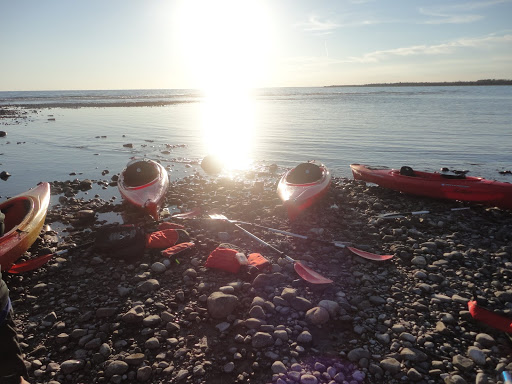
One of the things that have been very helpful for me when I am not around family or friends is meditation. I always return back to the time when I first went kayaking with my awesome friend Jo! That time was very peaceful, calming, and serene for me. Here are some pictures from that time:

Our Hair

Trigger Warning: This post talks about domestic violence.

Today was a slow day for me. I didn’t really do much homework, just watched some television, went for a bite to eat, went down to the pool, and now I am back in my hotel room.

I am kind of missing home right now. All I see are families every where in my hotel.

I am writing this post after some reflection about this past week and I just say that I want to do more public speaking whether it is motivating or sharing my story. During this past week I had the opportunity so share my journey through the criminal justice system. Police contact didn’t begin with formal laying of charges. Just like many youth, police contact began with a warning. Then again, police contact was in relation to my first contact with psychiatric care. In my presentation, I used the terms “criminal justice system survivor” and “psychiatric care survivor” because I wanted to emphasis that these are not systems of justice and health. Rather, from the standpoint of an Indigenous woman, these are systems of injustice and violence, and I am a survivor of both systems.

I discussed in detail some of the instances that led to my first formal laying of charges, and like most women who enter the criminal justice system, it was a domestic dispute. I shared my experiences and after the talk that day, another Indigenous women had come up to me later and told me that she felt the same way when I talked about once incident. In that incident I shared that my ex boyfriend at the time wouldn’t let me cut my hair, and that he said to me, “it is too long and too beautiful to cut.” Little did I know that he would use my hair to pull me out of bed whenever he wanted, or pull me back into bed whenever he wanted. This lady shared with me that talking about her similar experiences was always the most hardest especially the parts about hair pulling.

After thanking her for having the courage to share with me her story, I told her that it’s okay to cry about it and that when I cut my hair, it was a part of grieving for me. I had a lost a bit of myself in the relationship and I was willing to let go of it to grow into a new person. Our hair, as Indigenous persons, also connect us to our past especially the sad part of the forced removal of children from their homes to residential schools. At these schools, children had their hair cut off to remove the cultural importance/connections to them. Whenever I hear about these stories, it makes my heart heavy because even today as Indigenous peoples we experience violence connected to our hair. These stories connect us. Our hair is important to us and for Indigenous women, when it is used against us, it hurts us, and that hurt carries over to next other generations when children see it, experience it, and cannot escape from it. So when non-Indigenous people don’t understand that our hair is important and that when it is used against us to commit acts of violence whether in the past or present, it frustrates me because only a few understand and only a few will help make a change. I wish more people understood and I wish more people would want to help make change.

Amazing Gathering

Wow wow wow! I am so grateful to be sitting here in this lovely BC hotel and to be able to write about my experiences at this lovely event I am attended right now.

It is FREDA’s National Day of Research 2012 and there is a plethora of amazing speakers, presentations, and wonderful people. The theme of the gathering is exploring the continuum of violence against women and girls. There is definitely a criminology component to all of it. So, I am definitely absorbing as much information as I can to take it back with me to use in my own schooling. Much of the presentations are related to Intimate Partner Violence, Sexual Assault, Law, and Women’s Experiences.

This morning I had the opportunity to share my own experiences with a lovely group of women. If you would have asked me years ago, where do you think you will be 10 years from now? I don’t think I would have said, sharing my story of domestic and sexual violence, along with my experiences in the criminal justice system both as an offender and a victim, to a group of women who were so willing to listen and courageous enough to share their own experiences with me afterwards. Such an honor to be here…