Author: kwetoday

Sex work is real work

Here is my ignitelondon.ca talk that I gave a couple of weeks ago. Video hasn’t been posted yet so decided to share the word copy of it 🙂 Enjoy!

Let’s talk about sex. Erin Konsmo, the artist who let me borrow her pictures today, suggested this title after I was not sure how to introduce the topic: Sex work is real work.

Currently I am at Western studying Criminology. I have a strong interest in issues relating to Aboriginal women (being one myself). I moved to London in 2006, went to Fanshawe in 2008 and graduated in 2010 from the Law Clerk program. Now, here I am today.

With the topic, I am here to help deconstruct the stigma that sex workers face and discuss the decriminalization of this trade. Deconstruct and decriminalization: the double Ds of sex work.

On September 28, 2010, Superior Court of Justice’s Himel ruled that Canada’s current prostitution laws violate the Charter of Rights and Freedom and should be struck down. Justice Himel decision stated that the current laws forced “prostitutes to choose between their liberty interest and their right to security of the person.”

This means that prostitutes, also known as sex workers, have to decide between their freedom or right to security as persons because of the current sections within the criminal code of Canada.

So what is a sex worker you ask? Carol Leigh coined this term in 1978 at a conference to remove the negative connotations associated with other labels. She defines sex worker as someone who works in the sex industry, and who actually provides sexual services as opposed to the management and staff of such industry.

Sex workers are diverse group. You have all probably come across a sex worker or knew a sex worker in your life but did not know it.

This stigmatization that sex workers face has become normalized within Western society. Stigma is defined as an attribute that reduces an individual from a whole and usual person to a tainted, discredited one; they are usually considered deviant, shameful; and thus, are avoided by those outside the stigmatized group.

The whore stigma, as pointed out by Gail Pheterson, is one of the most powerful tools for the social control of women. Two French sex worker activists,

Maitresee Nikita and Thierry Schaffauser, coined the term whorephobia which may be defined simply as the fear of sex workers. Those who exercise violence against sex workers see themselves as doing a service to humanity, and sometimes those who read about these violent acts in the media agree with the whorephobes.

This type of social control continues to normalize this type of hate and violence faced by sex workers.

An article released by FIRST (Feminists advocating for rights and equality for sex workers) in February 2011, pointed out the fact that $10 million dollars was allocated for missing and murdered women but not a single dollar was allocated to sex worker safety needs. It is with this knowledge that we must be reminded that Robert Pickton targeted sex workers in Vancouver’s Downtown East side,

Further, according to a report conducted by Chris Bruckert and Frederique Chabot in collaboration with POWER (Prostitutes of Ottawa/Gatineau Work, Educate and Resist), there are many intersecting marginalizations that continue to oppress and leave specific groups at a greater disadvantage. One of these groups are Aboriginal people. This report, dated December 2, 2010, highlights that Aboriginal people experience poverty at a much higher rate than any other group within Canada, and that the over-policing of this same group is well-documented. Aboriginal sex workers, as part of an already disadvantage group, may face discrimination for being Aboriginal and for being a sex worker.

The report also highlighted that issue of poverty is a significant variable at the middle of these intersects. However, it must be noted that not all Aboriginal people who live in poverty are sex workers and not all Aboriginal people, especially women, who enter the criminal justice system are sex workers.

As the report states, “sex workers are not poor because they are sex workers; they are poor people who are sex workers.”

High poverty rates, high unemployment rates, and well-documented cases of over-policing, decriminalizing sex work becomes important especially for significantly marginalized groups, like Aboriginal women.

Further, entry into the criminal justice system and facing a criminal record for simply being part of an occupational group can be detrimental to one’s freedom to make choices.

Individuals who work in the sex trade are social agents capable of making choices. Criminalizing their work limits their freedom to choose.

We must remember that sex workers do not ask to be victimized or criminalized as outcasts to society. They ask to be treated as equal and as persons with rights just like every other Canadian, including you and me.

When we commit to the same ideological values of whorephobes and contribute to the social stigma faced by sex workers, we commit to the alienation and isolation of this occupational group. Deconstructing the social stigma and addressing the issue of whorephobia is important for individuals and institutions within our society to properly address the issue of violence, victimization, and criminalization of sex workers.

I hope I was able to arouse some new ways of thinking with the double Ds of sex work. Remember, sex work is real work. Thank you to these organizations for the articles they written and reports they produced. My name is Naomi Sayers and I am from the Garden River First Nation

ONCA Canada v. Bedford

Like whoa! I am in a whirlwind of emotions today. Partly good and partly frustrated.

Today, the Ontario Court of Appeal announced it’s decision regarding Bedford v. Canada in the Ontario Superior Court of Justice. Justice Himel originally struck down sections ss. 210, 212(1)(j) and 213(1)(c) of the Criminal Code of Canada on September 28, 2010 as unconstitutional. However, not long after, the Attorney General of Canada and AG of Ontario opposed the application by Bedford, et al.

The government’s response can be read HERE. Basically, they said that the lower court’s decision is not binding because it did not follow a higher court’s previous decision (stare decisis) and that these sections did not pose risk to sex workers but rather that “the risk to prostitutes is inherent in the nature of prostitution itself.” Note: it is with these types of views that sex workers have previously faced and continue to face violence from both individuals and institutions; sex work is dangerous because of the indifference that institutions and individuals display towards sex work and sex workers themselves.

Justice Himel’s decision meant that these sections DO violate Section 7 of the Charter: life, liberty and security of the person. This means that, as cited in ONCA decision,

“Prostitutes are faced with deciding between their liberty and their security of the person. Thus, while it is ultimately the client who inflicts violence upon a prostitute, in my view the law plays a sufficient contributory role in preventing a prostitute from taking steps that could reduce the risk of such violence.”

Justice Himel’s decision meant that these sections DO violate Section 2(b) of the Charter: freedom of expression. This means that, as cited in ONCA decision,

“….does not meet the minimal impairment test. The expression being curtailed is not purely for an economic purpose, but is also for the purpose of guarding personal security, an expressive purpose that lies at or near the core of the guarantee.”

There was a lot of tweeting going on today and also a lot press releases from organizations that ROCK! You can check out some of those organizations’ press releases here:

A few things must be noted with this decision: It does not mean that a bunch of women are going to become sex workers now. It takes a lot to do this type of work and it is definitely not made for everyone. So, don’t think that this will cause the “moral fibre” of Canada to disintegrate. The moral fibre has long been tossed down the drain when Harper gained majority (just saying). It also does not mean that families are going to be ruined and marriages are going to be affected. Sex workers have families and relationships too! Sex workers are persons too! A brief outline of ONCA decision:

  • s. 210 and 212(1)(j) of the Criminal Code of Canada(CCC) are unconstitutional.
  • section 212(1)(j) are to be clarified that the prohibition on living on the avails of prostitution applies only to those who do so “in circumstances of exploitation”.
  • section 213(1)(c) does not offend the principles of fundamental justice; does not infringe the respondents’ s. 7 Charter rights; the application judge was bound by the Prostitution Reference to hold that s. 213(1)(c) is a reasonable limit on the right to freedom of expression under s. 2(b) of the Charter.

You can read over the entire decision yourself as I am not going to outline it paragraph by paragraph. The decision relating to communication/solicitation/s. 213(1)(c) was arrived on the basis that it did not mean the requirements for being “arbitrary, overbroad or grossly disproportionate.” I beg to differ, or at least agree with the dissenting judge. You can also read the reasoning/logic behind the dissenting decision which means this judge did not agree with opinions the majority. MacPherson J.A. did ultimately agree with the decisions relating to section 210 and 212 of the CCC. One important point that MacPherson highlights in the dissenting decision is this: My colleagues overlook evidence that, instead of reducing street prostitution, the communicating provision forces prostitutes into isolated and dangerous areas. MacPherson J.A. goes on to state, “By displacing prostitutes into isolated areas and discouraging them from working together, the communicating provision increases the risks faced by prostitutes. My colleagues disregard this displacement and assign no weight to its effects…Any measure that denies an already vulnerable person the opportunity to protect herself from serious physical violence, including assault, rape and murder, involves a grave infringement of that individual’s security of the person. The infringement caused by the communicating provision is especially significant in light of the reality that many prostitutes have few alternative means of protecting themselves. Putting aside the fiction that all prostitutes can easily leave prostitution by choice or practise their occupation indoors, the communicating provision closes off valuable options that street prostitutes do have to try to protect themselves.” This is important to note because sex workers who are most affected by this decision to stay section 213 are the ones who are most visible, who are ultimately the most vulnerable: street based sex workers. On a final note, MacPherson J.A. states, “For many prostitutes, safe working spaces are hard or impossible to come by…The world in which street prostitutes actually operate is the streets, on their own. It is not a world of hotels, homes or condos. It is not a world of receptionists, drivers and bodyguards.” This is ultimately true and cannot or should not be ignored. The image that is portrayed within the media or movies that sex workers either live a glamourous lifestyle or a very dark one filled with drug addiction. There is no in between. This is a problem because some individuals may never acknowledge the fact that sex workers may have families, relationships, or a place to call home. The frustrating part of today is that some individuals have taken the time to message me via social media and state that they agree with the decision. However, after much back and forth correspondence, there still exists some major misconceptions when it comes to sex work and sex workers. Some stating that sex work should be legal so that it can be regulated and policed. Sorry, but that is A MAJOR PART OF THE PROBLEM. Sex workers, especially outdoor sex workers are the most visible and are likely to experience over policing. In a report prepared by POWER, it was concluded that sex workers face stigmatization which causes them to be seen as the “other” and viewed as a threat to society. These views and images of sex workers are then embedded into institutions, like policing agencies, which leads to social profiling and over-policing (view the report HERE). Some also stated that they agree with this decision so that this profession could be ensured that health and safety regulations are followed by all. One of the main issues that sex workers face is access to such services. This is one the reasonings for the decriminalization of sex work. Sex workers, as outlined in the report by POWER listed above, “…are not passive and actively seek to minimize the physical, sexual, financial, and health risks they confront.” The one resource they do not access is the criminal justice system. With this being said, we have to be aware of how the media portrays the decision of this case. I have seen titles such as “Sex workers considered ‘real citizens'” and “Appeals court legalizes brothels”. The idea that sex workers are not seen as “real citizens” contributes to the dehumanization of same individuals. The idea that a bunch of brothels are going to pop up everywhere is also untrue. As I stated before, these decisions will not cause the “moral fibre” of Canada to disintegrate, and that it takes a lot to do this type of work. These decisions were made in an effort to make it SAFER for sex workers to conduct business. Sex workers are persons in Canadian society deserve the same protection as guaranteed to everyone else. Sex workers are persons too!

Unemployed?!

Here I am sitting at school today, working on a research paper that I am not entirely sure what is being asked of me. My professor told me in an email, “I trust that you can figure it out.” I will figure out.

Earlier today, I was sitting in the Dean’s office discussing an assignment. I had a mini breakdown. Everyone keeps asking me “Are you okay?” after I tell them that “yes, I am unemployed…still unemployed.” I wrote about how thankful I was for this part-time job earlier. However, after the employer decided to move further away from London ON, I grew a little more insecure about this situation because of the distance. I was falling behind in school and my grades were suffering. So when my then-employer told me that they needed someone there more than I could be there, I was more than relieved when he said he needed to look for someone else.

The moment I was let go, I walked into my apartment and I called my mom. She knew that I was meeting with my employer and wanted to know how it went. When she picked up the phone, all she could say was, “well, you sound relieved.” I was relieved. I know that in this day and age, some people would tell me that I should have dealt with the distance to travel. Unfortunately, fallen grades for a part-time job that doesn’t have any prospect of becoming full-time any time soon is just not worth it.

Some people may think I am a bit crazy but I believe that it will lead to bigger and better things. I am hopeful and I am positive. When I think about school and finals, I now realize that I can focus on finishing off this semester strong. Maybe, I might just reach my goal of making the Dean’s list or maybe not. Yet, I do know that I tried my best. With my job, I know that I tried my best. It just wasn’t a good fit anymore.

I can focus now on the things that I want to focus on like the Women’s rep position for the Aboriginal People’s Commission, and writing those proposals for speaking at conferences (and working hard on making my dream come true to become a public speaker/presenter). I can focus on creating more art. I mean, those things don’t all pay the bills but I know that things will work out in the end. As stated earlier, I am hopeful and positive. Worse things have happened, and this is just minor. I can make things happen for me, and in agreement with my professor, I know I can figure this out.

From the words of Pablo Picasso, “Everything you can imagine is real.”

Fleming Drive

So I tried my best to stay away from writing about this but I just couldn’t after I read THIS lfpress.com article.

The landlords complaining about being targeted? Honestly, I am thankful for my CURRENT landlord. He is nice, courteous, and even let me in after I locked myself out at 11:30 pm after studying all day at school. I am not as nerdy as I sound. I like to let my hair down once in a while like any other person my age.

How does this relate to Fleming Drive incident? I also used to live on Thurman Circle which is quite close to Fleming Drive. Well, okay, I lived there only for one month. I moved out after I realized that the girls I was living with partied EVERY SINGLE DAY! Yes, that’s right: there was a party on Thurman Circle EVERY SINGLE DAY and not just my house.

Correction! The landlord kicked me out after I complained about these girls who partied every day, and left the house in a mess (like gross, rotten food mess). She said I wasn’t a “good fit.” Oh, I am sorry that I didn’t party every day, leave the house in a mess (like GARBAGE EVERYWHERE), and punch holes in the wall like the other girls. My landlord, before I moved in, told me the girls were “great” and “didn’t party.”

My friend who lived with me responded on my Facebook with this comment to the above link: I know right… they were unbearable… and she didn’t even do anything about the noise level… those kids were super messy too and had very little respect for other peoples property…… by the way did you get an email from the alumni association … apparently they are “trying” to save the image of the school so our reputations arn’t tarnished by it…HA yea right

I did feel bad for my friend, who was completing her last semester there and I suggested she move in with me. I had two semesters left and moved out after my landlord gave me the news. On that St. Paddy’s day, the whole street had a party. Fleming had a party and there were cops there on the street right around noon. I remember seeing the pictures and I remember my friend telling me about it. That was in 2010.

In 2011, the same thing happened.

The police frequented the area when I lived there for the whole month that I did live there. In fact, the police were at my residence (not for me *lol*) a total of two times in 4 weeks and I saw them frequent the area during the day, during the night. In addition to that, the cabbies wouldn’t even drive me into my street if I came home from a night out. Not because I didn’t pay or whatever, but because of their past experience with other people who lived in the area (remember the cabbie being taunted and rocked in his car that one year??).

Partying on St. Paddy’s day isn’t anything new. I don’t know why there was better planning for this area that is KNOWN for partying. Yes, even university students go to party there! Yes, that’s right Western students go there *SMH*

We are not all perfect little angels and when we all point the finger at each other saying “it’s that person’s fault” or “it should be this organization’s fault.” NOTHING and I REPEAT NOTHING gets done.

I noticed that I am reading a lot of “all students should be charged.” You know what, let the police handle that. People have suggested expulsion, suspension, etc. You know what, let the school handle that.

But I will give you my opinion having lived there, having graduated from that school, and with experience of the criminal justice system:
– Let the police do their job
– Let the police handle each case based on the individuals who are charged and on their past criminal record
– Let the police decide who to arrest
– Let the courts decide how to handle those who are charged
– If the school decides expulsion, they should plan to prevent this from happening in the future! Perhaps security in place that lives/monitors the area (oh wait, the police already do that).
– If we all just charge everyone and anyone who is seen in a picture, you have to realize that these young people will be living with a criminal record for the rest of their lives (okay, well except those that receive conditional or absolute discharges). Even if they are charged and sentenced to whatever type of punishment (fines, restitution, probation, etc), they will still be affected by having a criminal record. You want to say “well they deserve to pay!” well let the courts decide that.

But honestly, the last thing I would want is for a bunch of young people with criminal records or suspensions/expulsion from school. That type of punishment affects them in the long run. Will they be able to get a job? Be able to apply to another school? You say that was their decision to commit the crime. Honestly, in the long run, as tax paying citizens, we still have to pay if we all decide to commit to the idea that they should all be charged and expelled from school. When we just give up on our young, good or bad, we give up on our future.

Overrepresentation

Today, I am getting ready to do an ignite talk (www.ignitelondon.ca). I am actually not nervous about this (okay maybe a bit) but I am nervous about receiving my mark back from these two other essays I wrote. I think I could have set up my arguments to be a bit more persuasive; however, due to time constraints, was limited. I actually had to ask for two extensions–you would think being unemployed I would have more time. No, that’s not the case. Working part-time and trying to do full-five credits for a school year is tough. At my school, they even consider 3.5 credits full time.

Anyways, I am nervous. I honestly think there is too much pressure on undergrads. This blog post isn’t about that topic though.

I was kind of annoyed when I was writing my second essay. It was on the overrepresentation of Aboriginal women in federal institutions. A bit of background:

Aboriginal women are:

  • …more likely to receive a higher security classification
  • …are more likely to be unemployed (full-time)
  • …more likely to head single parent households w/ less income than non-Aboriginal single mothers and Aboriginal single fathers
  • …overrepresented in the sex trade
  • …are overrepresented in the federal inmate population

One student talking to me the other day said she was angry with everything she was reading (she was writing an essay on Aboriginal women too). On the advice that was given to me, I told her to use that anger to write. I try to write about things that are near and dear to me.

The overrepresentation of Aboriginal women in Canadian institutions is near and dear to me because I met a lot of Aboriginal women who were or have been in prison/jail, either for a short time or a long time.

What made me angry about this paper was that the security classification system is extremely discriminatory. This classification system uses categories such as education, employment, sexual habits, or past victimization, to determine if the individual requires a higher security classification or not. Based on the stats I listed above and the categories listed in this paragraph alone, Aboriginal women then receive a higher security classification than any other prison population.

Oh and should I add that Aboriginal women make up LESS than 3% of the total Aboriginal population, yet 1/3 of the total prison population and 50% of the high-security federal inmate population? Yeah, that is important to remember when you look at those stats and the security classification system.

Just thought I would let you all know. You know, in case you are all wondering about Aboriginal women in Canada again.

Indigenous post-secondary students

INDIGENOUS STUDENTS IN POST-SECONDARY INSTITUTIONS

In January of 2011, Bill C-3 Gender Equity in Indian Status Registration was enacted, which allows “grandchildren of women who lost Indian Status as a result of marrying non-Indian men” to apply for their status (Service Canada 2011). In 1985, a similar change happened to the same piece of legislation, the Indian Act, called Bill C-31, an Act to Amend the Indian Act (Native Women’s Association of Canada NWAC 2011). In an effort to reduce the gender discrimination within the Indian Act, section 12(1) of the Indian Act, which stated that an Indigenous woman who married a non-Indigenous man could no longer retain her status, was removed (NWAC 2011). Not so coincidentally, up until the year 1991, there was also an increase in Indigenous peoples with higher educational credentials. However, White and Beavon suggest that this increase in higher education credentials among this population group may not be because more Indigenous people are going to university; rather, the increase may be attributed to more Indigenous peoples declaring their status because of such legislative changes (2009:8). With the most recent changes to Bill C-3, an increase in Indigenous peoples with higher credentials in subsequent years may then also be attributed to the January 2011 legislative changes. These policy changes create an illusion of more Indigenous students in university, but the reality is that there is more people declaring their status after university.

These policy changes that create the illusion that more Indigenous students are benefitting from post-secondary are detrimental to Indigenous students who are currently in university. Hull notes that Aboriginal groups experience difficulties with regards to success and achievement throughout their educational careers, but notes most difficulty lies in completing secondary school and university (2004:157). Additionally, Clement highlights that the gap between Registered Indians, as defined by the Indian Act, and other Canadians with university degree completions nearly doubled from -6.5% in 1981 to -13.2% in 2006 (2009:96). This paper will address the gap between Indigenous and non-Indigenous students in terms of post-secondary completion rates by answering the following question: Why are Indigenous students less likely to complete a post-secondary education within the university stream? Within this paper, the term post-secondary refers to universities within Canada. However, there is limited research addressing university completion among this group, as much of the research that exists focuses on primary and secondary outcomes. Further, the term “Indigenous student” is used in a broad manner to include First Nations students, Inuit students, and Métis students. There are limits to using this term with inclusivity. For instance, much of the research obtained for the purposes of this paper addresses specific Indigenous groups. The reason for using the term “Indigenous” in its inclusivity is to highlight the fact that all Indigenous groups lag behind the non-Indigenous population in terms of post-secondary completion (White and Beavon 2009:6). To answer the question, a sociological perspective will be undertaken employing a Marxist theory to explain why Indigenous students lag in post-secondary completion, and using Kingsley Davis and Wilber E. Moore’s social stratification theory to help explain why, as a society, this issue needs to be addressed to move forward in a positive direction.

In the Marxist theory of social relations, there exist three interdependent concepts: alienation, exploitation, and false consciousness. A false consciousness is defined as “having an incorrect idea about the social world” (Zavitz-Gocan 2011). These ideas can be incorrect in one of two ways: either that the idea is so false that it does not represent reality or that the idea about the social world is accurate but deviates from behaviour (Zavitz-Gocan 2011). Universities create a false consciousness among students, both Indigenous and non-Indigenous, through alienation. This alienation is created through the commodification of knowledge. Blyth describes the university experience as “often overcrowded academic spaces…offering knowledge as a commodity for students who, made docile and passive, [are] expected to consume it” (2008:67). For Marx, a commodity is a source of alienation through commodity fetishism (Ritzer 2011:58). Commodity fetishism is the concept that commodities acquire an exchange value, and can be bought or sold (Ritzer 2011:58). According to Marx, commodities are defined as “products of labour intended primarily for exchange” (Ritzer 2011:57). The commodification of knowledge occurs when professors reproduce this knowledge in the lecture room in exchange for a salary and tenure. Upon graduation, students search for jobs that their undergraduate training and knowledge could be exchanged for an income. This commodification of knowledge contributes to further alienation of the Indigenous student from mainstream university education. Beverley describes university education as “divorced from the world in which [students] will have to work” (2000:132). Indigenous students may feel disconnected from the university experience, especially from the various theories, concepts, etc. that a professor may teach them, and from the content of the textbooks they are told to purchase because they do not correspond to their own realities both as an Indigenous person and as a student.

As stated earlier, a false consciousness is an incorrect idea about the social world, and this could be created by one of two ways. One of these ways is that the idea about the social world is an accurate one but deviates from behaviour, which may create a class in itself (Zavitz-Gocan 2011). A class in itself is a class without consciousness and is defined as “a group with similar interests [with] its potential for conflict” (Zavitz-Gocan 2011; Ritzer 2011:62). The potential for conflict is created by a university’s rigid and competitive degree requirements to enter into certain programs. Beverley describes the university environment as having a “‘me-first’ attitude” (2000:133). Even though a university may have a specific place for Indigenous students to gather, universities contribute to the problem though the ghettoization of First Nations studies. This is a problem because many Indigenous issues are presented in lectures, but these same issues are not adequately discussed in lower levels of education. For example, resources for teaching history that teach dominant colonial ideologies and that do not adequately portray Indigenous experiences may have been used in primary school classrooms (Iseke-Barnes 2005). As an Indigenous student in a predominantly non-Indigenous high-school history class, I was taught that residential schools were created to “educate” Aboriginal children. When I questioned the teacher’s lesson, I was immediately sent out of the classroom. In a similar fashion, university lectures are very limiting in their discussions. When professors bring up issues of poverty and substance abuse among Indigenous groups, professors may assume that students are prepared for university and many non-Indigenous students do not question why or how Indigenous groups face these realities. Either out of fear of saying the wrong thing or for simply having no interest in Indigenous issues, many students then accept this Indigenous identity as is it presented to them and do not question why or how this group faces these harsh realities (Beverley 2000). Thus, universities have not helped the problem; they simply divided the class of students and eliminated potential conflict by ghettoizing Indigenous-themed courses. Indigenous students may be attuned to the potential conflict that exists, and decide for themselves that education is of no use for them. Indigenous students may develop this attitude toward university education because course content may alienate them from their own experiences.

In addition to this false consciousness and alienation, exploitation occurs. Exploitation occurs when there exists a differential in power relations. Beverley further describes the undergraduate student experience as “a list of largely unwritten expectations” (2000:127). These expectations are ones that each student must abide by in order to be successful: be on time, always present, and learn what the professor presents (Beverley 2000:127). Not only must students learn what their professor decides to teach them by choosing their textbooks and choosing which topics to lecture on, both student groups must also abide by what the university dictates. For example, my program has a rigid module where many of my classes have not adequately discussed Indigenous issues in a historical, cultural, or social context, even though Indigenous issues are constantly the subject of lectures. Lee Maracle, an Indigenous scholar, describes this university experience as constant re-victimization for the Indigenous student (2012). Indigenous students may feel isolated from mainstream university education causing them to further question, both from the perspective of an Indigenous person and a student, what good is a university education.

By way of its own environment and through the commodification of knowledge, universities create a false consciousness among its students via alienation and exploitation. This alienation is created through the commodification of knowledge. Professors are hired for their knowledgeable background, and reproduce this knowledge in the lecture room in exchange for a salary and tenure. Upon graduation, students search for jobs so that their knowledge can be exchanged for an income. Alienation is intensified through the creation of a student class in itself through the inherent conflict of the university’s rigid and competitive degree requirements. As false consciousness is interdependent on alienation and exploitation, students are also exploited through the differential in power relations where the university and professor dictate what the students will learn. Indigenous students may be aware of the exploitation and the alienation by the constant re-victimization of their historical, cultural, and social experiences, thereby potentially causing some Indigenous students to question the purpose of a university education.

In an increasingly globalized society, the need for a university education has become more important now than ever. However, some may argue that university is not for everyone. So, why should we care that Indigenous students lag behind non-Indigenous students in completion rates? Iseke-Barnes states that continuing to ignore Indigenous issues is both damaging and demeaning to non-Indigenous and Indigenous student populations (2005:162). Davis and Moore’s social stratification theory highlights that there are two determinants to potential ranks: functional importance and scarcity of personnel (1944:243). Scarcity of personnel is affected by how talent to fill the position is acquired (Davis and Moore 1944:244). Talent can be acquired innately or through training, like university. In one study, researchers found that Indigenous students with higher credentials have relatively higher earnings in comparison to their non-Indigenous counterparts including other visible minorities (Walters, White and Maxim 2004:296). They suggested that even though Indigenous people with higher credentials are uncommon, there is a demand for them (Walters et al. 2004:296). Therefore, there is a clear need for Indigenous peoples with higher credentials.

Unfortunately, in addition to the inherent conflict within university environments as well as the additional alienation and exploitation as described above, Indigenous students may not see the benefit of acquiring these higher credentials that require long, costly training. Spence, White and Maxim argue that the economic status of a First Nation community may contribute to an Indigenous students’ educational outcome (2007:150). These contributing factors can be placed on a spectrum with no jobs existing at one end, many low-end jobs in the middle, and a mix of jobs (low, middle, high-end) existing at the opposite end. If there is a mixture of jobs, school becomes relevant for the Indigenous student, but if there are no jobs, the Indigenous student may fail to see the benefit of acquiring such credentials (Spence et al. 2007:150). With increased globalization and multicultural identities, Indigenous students may feel further displaced by the increased competition created by external factors that affect social solidarity or social stratification. Davis and Moore state that external factors that affect the stratified systems are increased cultural heritage and cultural diffusion (1944:249). However, in a highly globalized society, the need for technical training and knowledge is prioritized, and sacred or religious needs are withdrawn. Davis and Moore state that, “When the preoccupation with the sacred is withdrawn…a great development, and rise in status, of economic and technological position seemingly takes place” (1944:248). For Indigenous students, this may be interpreted as struggle with trying to prioritize their educational needs over their cultural needs, contributing to further displacement from university education.

This paper addressed the issue of the gap between Indigenous students and non-Indigenous students’ completion rates, in part, by employing a Marxist theory to explain why this gap exists and also used the social stratification theory to explain why this gap needs to be addressed. In addition to this question, Iseke-Barnes presents the question of who benefits from this type of education where the dominant ideology is continuously expressed and the Indigenous identity is incessantly re-victimized (2005). From the perspective of a student, nobody benefits especially if students are taught to passively consume knowledge as fact and in exchange as a commodity. Focusing on themes of decolonizing and indigenizing texts and classroom structure may be celebratory and disparaging for Indigenous students, but also a difficult and emotional task (Beverley 2000; Blyth 2008). However, Indigenous knowledge may begin to be included in the discussion of sociological issues. For example, Indigenous elders can be included as speakers of Indigenous knowledge within the classroom when discussing Indigenous issues, and not just in Indigenous-themed courses. Professors may also begin to include positive images of the Indigenous identity. Presently, there exist many Indigenous scholars who have published many articles on various sociological issues. An attempt to actively include such articles may deconstruct the Indigenous identity as one that is constantly victimized. Universities do not have to sacrifice non-Indigenous student experiences in an attempt to provide a non-alienating, non-exploitative university experience for Indigenous students, and Indigenous students do not have to sacrifice their culture at the expense of their own education. In the end, both structural and institutional changes can be made beginning today. The issue is complex but does not need to be an “Indigenous issue” any longer.

How to go with the flow…

  1. Have a goal. Even if you are just “going with the flow”, you cannot go anywhere if you don’t have a goal.
  2. Remember to breathe. You can’t do anything if you are not breathing…unless of course you are swimming underwater. THEN, I suggest you remember to hold your breathe!
  3. Realize you can’t control everything. You just can’t, and if you try to then you already failed.
  4. Be aware. Be aware about what goes around you and within in you. Find out what inspires you, and find out what annoys you. Then stop doing what annoys you, and start doing more of what inspires you.
  5. Stop caring. That is, stop caring about what others think of you. If you must care about what others think about you, make sure that those same people care about what YOU think.
  6. Write things down. Don’t make a to-do list. Instead, keep a reflective journal. Write down what you did, how you handled it, and how it made you feel. Then let it go.
  7. Start off small. That goal you have at #1, break it down into smaller goals.

I wrote this blog because lately people have been asking me “What do you want to do after all THIS?” What?! What’s THIS?! Why does everyone need to know about or need to have plans?! The only time that anything has ever worked out for me was when I just went with the flow. I didn’t expect anything, and I was honest about what I wanted. Sometimes people are set back when they talk to me and I can’t answer their questions. It’s not that I can’t or don’t know what I want. It is the exact opposite. I know EXACTLY what it is I want. I just know that if I set out a rigid, strict plan, then I’ve already set myself up to fail. Remember, this is what works for me. It may not work for you. Your flow might be different than my flow 😉

Who am I?

Who am I?

A few famous quotes that are useful when trying to answer this question are below

  • “Be who you are and say what you feel because those who mind don’t matter and those who matter don’t mind.” — Dr. Seuss
  • “The unexamined life is not worth living.”–Socrates
  • “I think, therefore I am.” — Rene Descartes

In the last few months, I found myself questioning who I am/was. I always hear statistics that tell me Indigenous people face dark, stark, unbearable realities. I have written about some of those realities even sharing some of my own personal experiences and my own personal stories. In sharing some of those personal stories, sometimes a random person who doesn’t know me, messages me to insult me. I just brush it off as that person doesn’t really know me.

Yet, sometimes I don’t even know who I AM.

I had a really empowering, emancipating experience about a few weekends ago. I was surrounding by many strong individuals who had a clear definition about who they were, where they stood and what they stood for. I felt quite little and perhaps even like a puppet existing in my own realities. Before this experience, I had been in counseling or seen counselors that spoke to me in a way that described me as the victim. I just accepted it. I was the victim. Whatever happened before me, defined who I was and it was normal for me to feel and act the way I had. Whatever decisions I made, those that saw me as the victim defined the choices I made as just being choices victims make all the time.

I don’t want to be the victim though.

I remember I did not want to be seen this way after sitting in a few lecture classes at school. We were listening to various public speakers. All these speakers were amazing. Some of them I could relate but then there was one who spoke about Aboriginal girls/women. A white, RCMP officer. He spoke on a topic that I had direct experience with yet he spoke as if all Aboriginal girls/women that had faced these realities were all victims and needed to be saved. At the end, I ask him some questions and politely reminded him that not all are forced to do things against their own will and some are even capable of making their own choices to leave the situation they are in. Key word: SOME. I was a part of that some. I realized the situations I found myself in were not good for me and I made the conscious decision to leave. I literally *snapped* out of it when I asked myself one day, “why do these things keep happening to me?” It was either keep doing what I was doing or change. I left one life behind for a life that was/is better for me…on my own terms.

I guess some people need to be reminded that yes, Aboriginal women/girls as a group experience a lot of bad things or find themselves in bad situations. However, this does not mean that we are all victims. I no longer want to be seen as the victim or being victimized in my experiences. Being constantly reminded that I was “the victim” doesn’t make me stronger, it makes me question myself. Who wants to be constantly questioning their own self or their own existence? I want to be seen as a strong, resilient Aboriginal woman for the decisions I made to help me be a more stronger and resilient woman than I was if I had not made those decisions…both good and bad. We all make bad decisions or experience bad situations; we don’t need our bad decisions or bad situations to define our existence.

"Jacob" a poem by Maria Campbell

This poem is written in “Red English.” This poem is an excellent form of decolonization and way of empowering Indigenous students by validating the historical experiences of Indigenous peoples. This poem talks about misappropriation of Indigenous peoples, forced removal of children and the residential school legacy, the use of story telling by Indigenous peoples to pass down knowledge, teachings, etc., and talks about the importance of the Elder within Indigenous communities. This poem is worth reading.

Maria Campbell is an author, playwright, filmmaker and fluent in four languages. Read more about Maria Campbell here.

Mistupuch he was my granmudder.
He come from Muskeg
dat was before he was a reservation.
My granmudder he was about twenty-eight when he
marry my granfawder.
Dat was real ole for a woman to marry in dem days
But he was an Indian doctor
I guess dats why he wait so long.

Ooh he was a good doctor too
All the peoples dey say dat about him.
He doctor everybody dat come to him
an he birt all dah babies too.
Jus about everybody my age
my granmudder he birt dem.

He marry my granmudder around 1890.
Dat old man he come to him for doctoring
and when he get better
he never leave him again.

Dey get married dah Indian way
an after dat my granfawder
he help him with all hees doctoring.
Dats dah way he use to be a long time ago,
If dah woman he work
den dah man hehelp him an if dah man he work
dah woman he help.
You never heerd peoples fighting over whose life he was
dey all know what dey got to do to stay alive.

My granfawder his name he was Kannap
but dah whitemans dey call him Jim Boy
so hees Indian name he gets los.
Dats why we don know who his peoples dey are.
We los lots of our relations like dat.
Dey get dah whitemans name
den no body
he knows who his peoples dey are anymore.

Sometimes me
I tink dats dah reason why we have such a hard time
us peoples.
Our roots dey gets broken so many times.
Hees hard to be strong you know
when you don got far to look back for help.

Dah whitemans
he can look back tousands of years
cause him
he writes everything down.
But us peoples
we use dah membering
an we pass it on by telling stories and singing songs.
Sometimes we even dance dah membering.

But all dis trouble you know
he start after we get dah new names
cause wit dah new names
he come a new language an a new way of living.
Once a long time ago
I could ‘ave told you dah story of my granfawder Kannap
an all his peoples but no more.
All I can tell you now
is about Jim Boy
an hees story hees not very ole.

Well me granmudder Mistupuch
he never gets a whitemans name an him
he knowed lots of stories.
Dat ole lady
he even knowed dah songs.
He always use to tell me
one about an ole man call Jacob.

Dat old man you kow
he don live to far from here.
Well hees gone now
but dis story he was about him when he was alive.

Jacob him
he gets one of dem new names when dey put him in dah
residential school.
He was jus a small boy when he go
an he don come home for twelve years.

Twelve years!
Dats a long time to be gone from your peoples.
He can come home you know
cause dah school he was damn near two hundred miles
away.
Him Mommy and Daddy dey can go and see him
cause deres no road in dem days
an dah Indians dey don gots many horses
‘specially to travel dat far.

Dats true you know
not many peoples in dem days dey have horses.
Its only in dah comic books an dah pictures shows dey
gots lots of horses.
He was never like dat in dah real life.

Well Jacob him
he stay in dat school all dem years an when he come
home he was a man.
While he was gone
his Mommy and Daddy dey die so he gots nobody.
And on top of dat
nobody he knowed him cause he gots a new name.
My granmudder
he say dat ole man he have a hell of a time.
No body he can understand dat
unless he happen to him.

Dem peoples dat go away to dem schools
an come back you know dey really suffer.
No matter how many stories we tell
we’ll never be able to tell
what dem schools dey done to dah peoples
an all dere relations.

Well anyways
Jacob he was just plain pitiful
He can talk his own language
He don know how to live in dah bush.
It’s a good ting da peoples dey was kine
cause dey help him dah very bes dey can.
Well a couple of summers later
he meets dis girl
an dey gets married.

Dat girl he was kine
an real smart too.
He teach Jacob how to make an Indian living.

Dey have a good life togedder an after a few years
dey have a boy.
Not long after dat
dey raise two little girls dat was orphans.

Jacob and his wife dey was good peoples
Boat of dem dey was hard working
an all dah peoples
dey respect dem an dey come to Jacob for advice.

But dah good times dey was too good to las
cause one day
dah Preeses
dey come to dah village with dah policemans.
Dey come to take dah kids to dah schools.

When dey get to Jacob hees house
he tell dem dey can take his kids.

Dah Prees he tells him
he have to lets dem go cause dats the law.
Well dah Prees
he have a big book
an dat book he gots dah names
of all dah kids
an who dey belong to,

He open dat book an ask Jacob for his name
an den he look it up.
‘Jacob’ he say
‘you know better you went to dah school an you know
dah edjication hees important.’

My granudder Mistupuch
he say Jacob he tell that Prees
‘Yes I go to dah school
an dats why I don wan my kids to go.
All dere is in dat place is suffering.’

Dah Prees he wasn happy about dat
an he say to Jacob
‘But the peoples dey have to suffer Jacob
cause dah Jesus he suffer.’

‘But dah Jesus he never lose his language an
hees people’ Jacob tell him.
‘He stay home in hees own land and he do hees
suffering.’

Well da Prees him
he gets mad
an he tell him its a sin to tink like dat
an hees gonna end up in purgatory for dem kind of
words.

But Jacob he don care
cause far as hees concern
purgatory
he can be worse den the hell he live with trying to
learn hees language and hees Indian ways.

He tell dat Prees
he don even know who his people dey are.
‘Dah Jesus he knowed his Mommy and Daddy’
Jacob he tell him
‘and he always knowed who his peoples dey are.’

Well
dah Prees he tell him
if he wans to know who hees people dey are
he can tell him dat
an he open in dah book again.

‘Your Dad hees Indian name he was Awchak’
dah prees he say
‘I tink dat means Star in your language.
He never gets a new name cause he never become a
Christian.’

Jacob he tell my granmudder
dat when da Prees he say hees Dad hees name
his wife he start to cry real hard.

‘Jacob someday you’ll tank the God we don dis.’
dah Prees he tell him
an dey start loading up dah kids on dah big wagons.
All dah kids dey was crying an screaming
An dah mudders
dey was chasing dah wagons.

Dah ole woman
dey was all singing dah det songs
an none of the mans
dey can do anything.
Dey can
cause the policemans dey gots guns.

When dah wagons dey was all gone
Jacob he look for hees wife but he can find him no
place.
An ole woman he see him an he call to him
‘Pay api noosim’
‘Come an sit down my granchild I mus talk to you.
Hees hard for me to tell you dis but dat Prees
hees book he bring us bad news today.
He tell you dat Awchak he was your Daddy.
My granchild
Awchak he was your wife’s Daddy too.’

Jacob he tell my granmudder
he can cry when he hear dat.
He can even hurt inside.
Dat night he go looking
an he fine hees wife in dah bush
Dat woman he kill hisself.

Jacob he say
dat ole womans
dey stay wit him for a long time
an dey sing healing songs an dey try to help him
But he say he can feel nutting.
Maybe if he did
he would have done dah same ting.

For many years Jacob he was like dat
just dead inside.

Dah peoples dey try to talk wit him
but it was no use.
Hees kids dey growed up
an dey come home an live wit him.
‘I made dem suffer’ he tell my granmudder.
‘Dem kids dey try so hard to help me.’

Den one day
his daughter he get married an he have a baby.
He bring it to Jacob to see.
Jacob he say
he look at dat lil baby
an he start to cry and he can stop.
He say he cry for himself an his wife
an den he cry for his Mommy and Daddy.
When he was done
he sing dah healing songs dah ole woman
dey sing to him a long time ago.

Well you know
Jacob he die when he was an ole man.
An all hees life
he write in a big book
dah Indian names of all dah Mommies and Daddies.
An beside dem
he write dah old names and
dah new names of all dere kids.

An for dah res of hees life
he fight dah government to build schools on the
reservation.
‘The good God he wouldn of make babies come
from Mommies and Daddies’
he use to say
‘if he didn want dem to stay home
an learn dere language
an dere Indian ways.’

You know
dat ole man was right.
No body he can do dat.
Take all dah babies away. Hees just not right.
Long time ago
dah old peoples dey use to dah naming
an dey do dah teaching too.

If dah parents dey have troubles
den dah aunties and dah uncles
or somebody in dah family
he help out till dah parents dey gets dere life work
out.
But no one
no one
he ever take dah babies away from here peoples.

You know my old granmudder
Mistupuch
he have lots of stories about people like Jacob.
Good ole peoples
dat work hard so tings will be better for us.
We should never forget dem ole peoples.

Maria Campbell

I came across part of this poem reading an article for an essay I am working on and I thought I would search for the full length of it. I found the full length of it here. I am glad I took the time to search for the full length.

Back to researching. ❤

Attawapiskat, Munsee-Delaware, London

What do these three places all have in common?

Housing issues.

If these places were to be placed on a continuum Attawapiskat would be at one end, London at the other and Munsee-Delaware Nation somewhere in the middle.

Attawapiskat, which I wrote about in a post over a YEAR AGO, is still facing the same issues they were a year ago. The difference? The media. Everyone wants to help which is good. However, what about Munsee-Delaware… what about them?

Munsee-Delaware is just west of London ON. They are facing a housing crisis too. LFpress wrote an article on this community’s issue on the same day another article discussed that London ON City Council would move “$1 million from London’s affordable-housing reserve to hold the line on taxes won’t cause problems for most Londoners.”

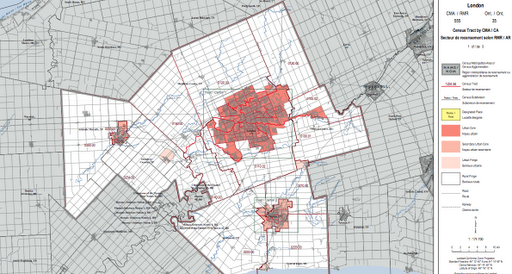
London ON is surrounded by many First Nations.

To view map, click HERE.

London ON actually reported the highest First Nations population numbers in the 2006 census.

In 2006, the total Aboriginal population was 3.8%. In Ontario, the total Aboriginal population was 2.0%. The total Aboriginal population in 2006 made up 1.4% of the city’s total population. From 2001, the Aboriginal population grew by 10% (the First Nations population grew by 4% and the Metis grew by 38%).

The Aboriginal population is young.The median age of Aboriginal population in London was 26.6 years, while non-Aboriginal population median age was 38.6 years for 2006. Nearly half of the Aboriginal people were under age 25 (48%), while only 32% of the non-Aboriginal population were under the age of 25. The Aboriginal population over the age of 65 was 3% of the total city’s population; meanwhile, the non-Aboriginal population over the age of 65 was 13%. Nearly 3/10 Aboriginal people in London were under the age of 15, compared to 18% of their non-Aboriginal counterparts.

The unemployment rate for Aboriginal people was 8.5% compared to 4.5% for the non-Aboriginal population. The occupied mostly sales and service jobs (jobs considered less stable and having less benefits). The unemployment rate was even higher for Aboriginals aged between 15-24 years. That rate was 19.8% for First Nations youth aged 15 to 24, 22.7% for Métis youth, and 13.5% for non-Aboriginal youth.

Aboriginal children under the age of 14 were most likely to be living with a lone parent.That means only one income coming in. Aboriginal children were more likely to live with a lone mother (43% vs 16%), a lone father (6% vs 3%), a grandparent (with no parent present) (1.4% vs 0.3%) or with another relative (1.4% vs 0.5%).

The Aboriginal population were less likely to be employed full-time with only 33% of the population employed full-time. While 40% of the non-Aboriginal population were employed full-time.

The houses that Aboriginal people lived in, 1/8 of the homes needed major repairs and 1/3 were living below the LICO line.

These rates are for the CMA for London ON.

Check out the full map, HERE.

No doubt that there is a housing issue in London ON alright. There is also a housing issue just west of London ON and a housing issue north of London ON.

If you want to care about Aboriginal issues, then care about Aboriginal issues, and not just the issues that get you the most face time in the media or the most public recognition for caring.